What happened
Norges Bank Investment Management, the state manager of Norway’s sovereign wealth fund (the Government Pension Fund Global), sent a letter to Norway’s Ministry of Finance suggesting changes to its bond investment strategy.
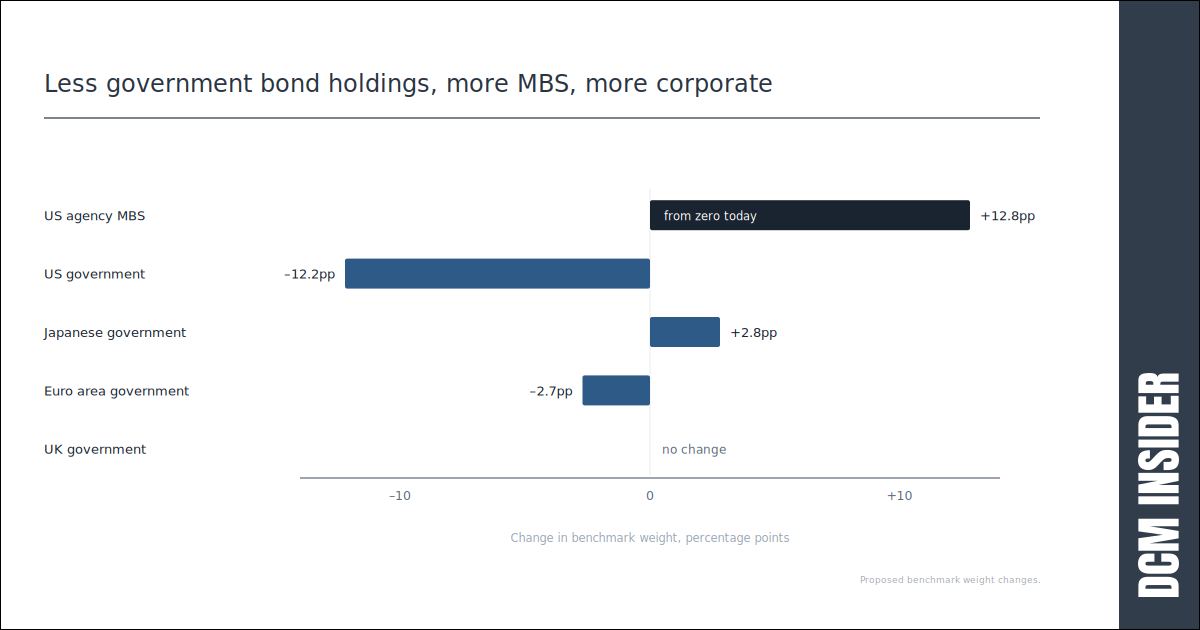
The most reported change was that the report recommends a significant reduction in holdings of US government bonds. This would reduce US government bonds from 34.1% to 21.9% of its benchmark bond index – a total reduction of $80 billion based on current bond holdings. The proposal also suggests a smaller (2.7%) reduction in euro area government bonds, a 2.8% increase in Japanese government bonds, and no change in UK government bonds.
This is part of a major overall shift from government bonds (70% to 50%) – and moving that to non-government bonds.
The non-government bonds the fund suggests buying instead include US non-government debt – including agency mortgage backed securities (MBS). One especially important addition would be US agency MBS debt – with total MBS weighting going up from zero today to 12.8% of its benchmark bond index. They would also start to buy CMBS and ABS – which given the fund’s size and the size of these markets, could be material new demand.
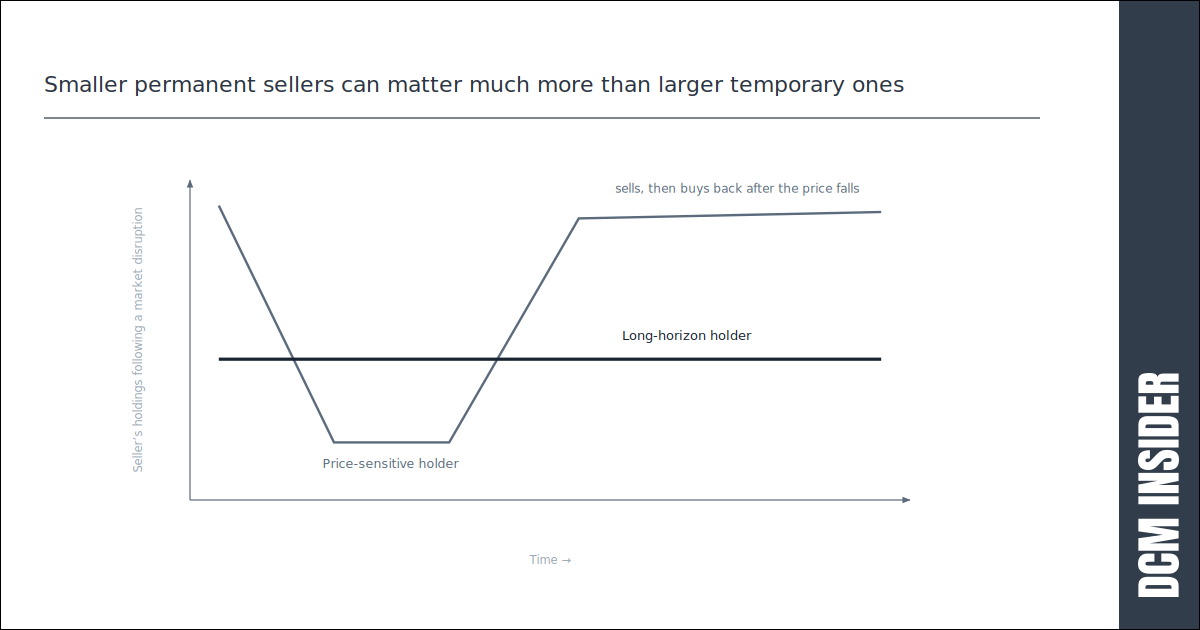
None of this is finalised – it will go through a process with the Ministry of Finance – and any final decisions would start to be implemented in the middle of next year (2027). The total amounts involved are also relatively small given the sizes of most the markets involved – the Treasury market is around $30 trillion and the US Agency MBS market is $9 trillion. The useful information here is that it is a data point in a possible broader reduction in allocation to government bonds and increased allocation to corporate/structured credit. The fact that this is long-term, stable money also creates a larger impact than if this were shorter term, more price-sensitive money. It also acts as signal for what some other large investors will do.
Why
Returns and diversification – The manager states that they are doing this to capture more risk premium and improve diversification.
Other possible arguments –
Relative risk – There may be (between the lines read) reasons beyond this – including a perception that the risk differential between US Treasuries and top-grade agency/corporate bonds has reduced – including now each of the three major rating agencies no longer rating US Treasuries as AAA (moved from AAA to AA+ by S&P in 2011, from AAA to AA+ by Fitch in 2023, and Aaa to Aa1 by Moody’s in 2025). The risk is of course still exceptionally low at a AA+ level, but the absolute categorisation between “risk free” and “top-grade risk asset” changes.
Liquidity risk – With recent changes in US Treasury markets – including reductions in holdings by other international creditors – there is some risk that market dynamics could change – which could result in less (though still likely positive) of a liquidity advantage to holding Treasuries over top-grade agency/corporate bonds.
We hope you find this helpful. We try to make the public sections of our articles valuable in themselves.
Access the subscriber-access section on this article. In the subscriber-access section, we cover what this means for issuers and investors going forward, and what bankers, investors, issuers and other market participants might want to do now.