Banks lock in over $30 billion in bond sales last week – as deregulation drives growing balance sheets.
Goldman Sachs, Morgan Stanley, JPMorgan
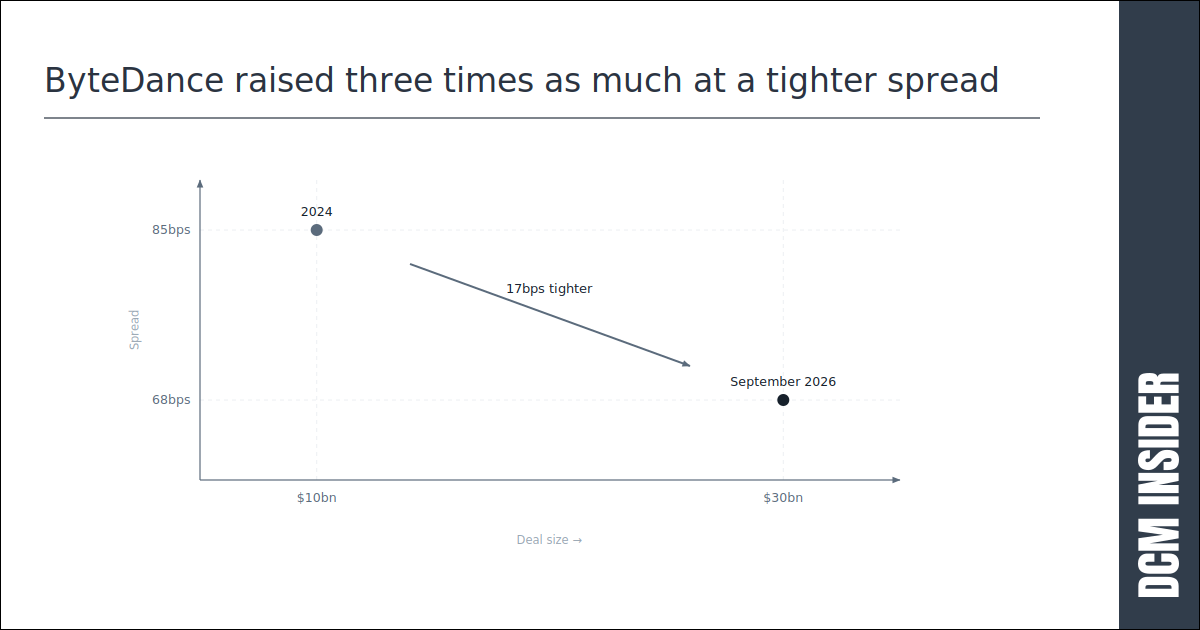
Last week saw a $10 billion bond deal from Goldman Sachs, a €5 billion bond deal from Goldman Sachs, a $9 billion bond deal from Morgan Stanley, and a $9 billion bond deal by JPMorgan – as well as a number of sub-$5 billion deals.
Good times to be a bank
The issuance follows excellent Q2 earnings.
“We’re in a very healthy, active, exuberant market with very high prices and very high volumes. We benefit from that. We just don’t know how long it will continue” Jamie Dimon, JPMorgan CEO after the bank reported its highest ever quarterly earnings
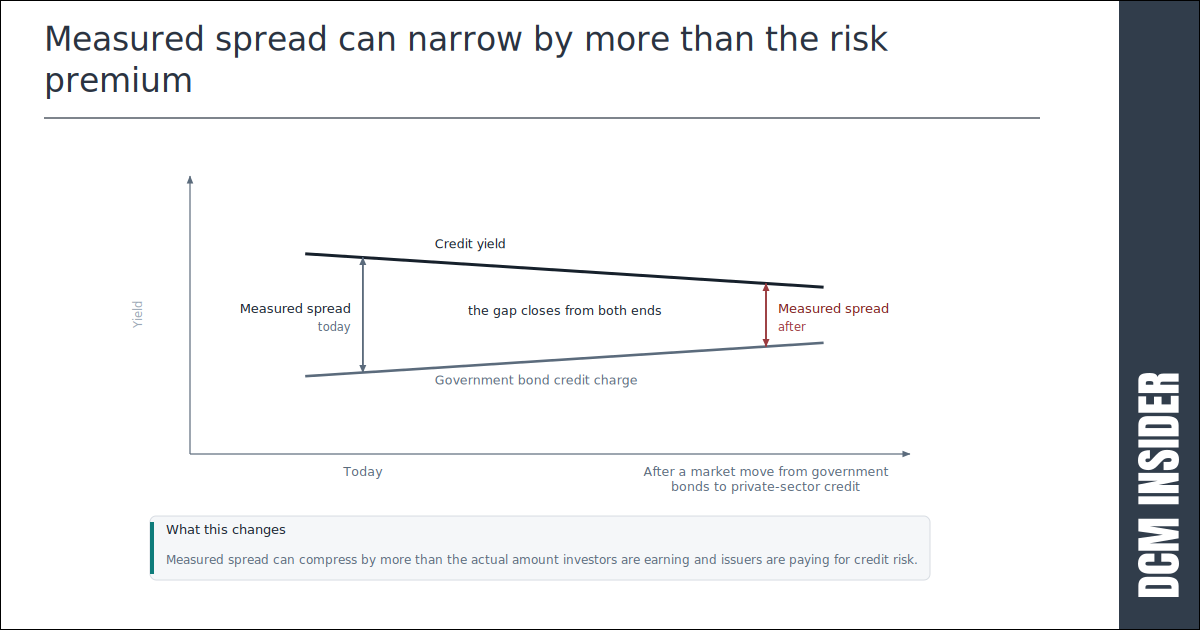
Locking in money while spreads are tight
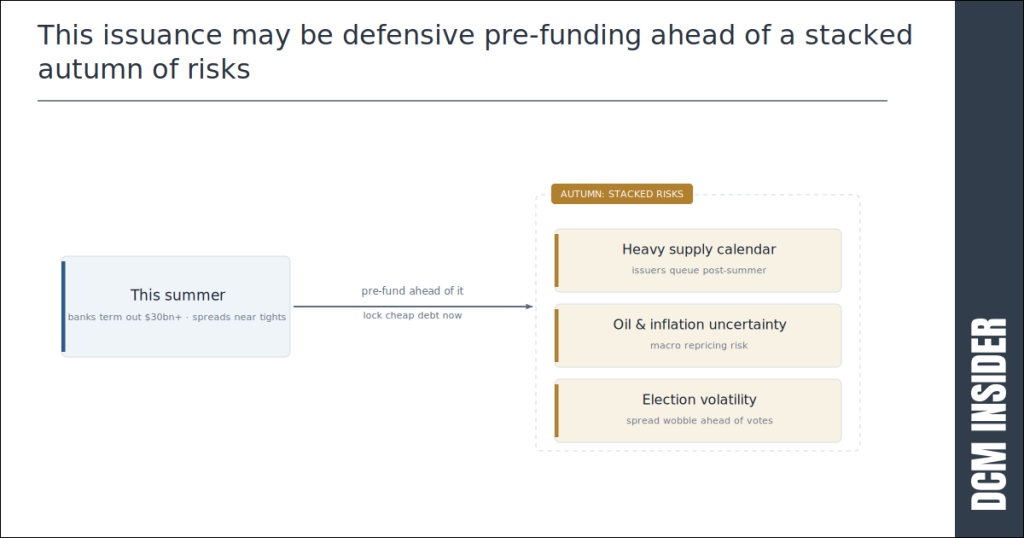
The banks have taken this opportunity to lock in debt while spreads are very low. This gets ahead of material risks to spreads – including the post-holidays (autumn) supply calendar, oil price and inflation uncertainty, and possible volatility ahead of elections. It may be the case that these issuers are among the best informed in the market – and the fact that they are taking this opportunity to issue in size might suggest that this is a good issuance window.
Deregulation as a tailwind – resulting in bigger bank balance sheets
US bank deregulation (including bank capital and liquidity requirement reductions) – and expected deregulation following elsewhere in the world – are allowing banks to make loans that would previously have not been possible. This is a partial reversal of increased regulatory requirements created after 2008, which led to smaller banks – and the growth of non-bank lending through private credit and fintech lenders.
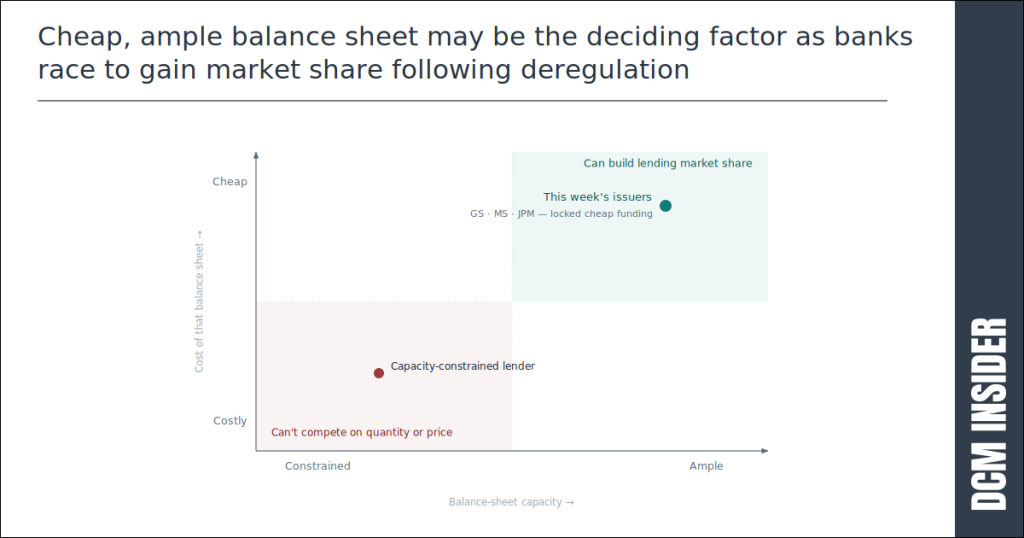
Now that banks can reenter these markets, there is a race to gain market share – and having balance sheet available (and the cost of that balance sheet) is a key resource in that race.
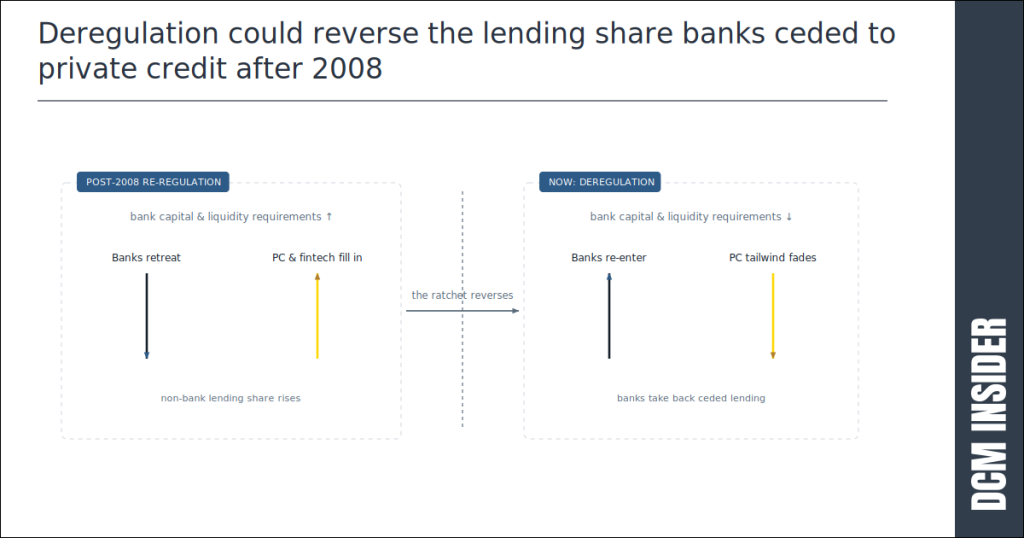
This might mark an increase in the rate of bank lending
If markets continue to be strong (supporting borrowing demand from the banks’ customers), banks’ bond spreads continue to be very low, and the current deregulatory path does not change, we may see a step increase in bank issuance – resulting in potentially much larger bank balance sheets in two or three years than today.