What happened
Democrats won majorities in both chambers of Congress in the midterm elections.
This changes the US government’s decision making – from all three elected bodies (Presidency, House and Senate) being controlled by the Republican party to a split – with the presidency being Republican and the Senate and House being Democrat.
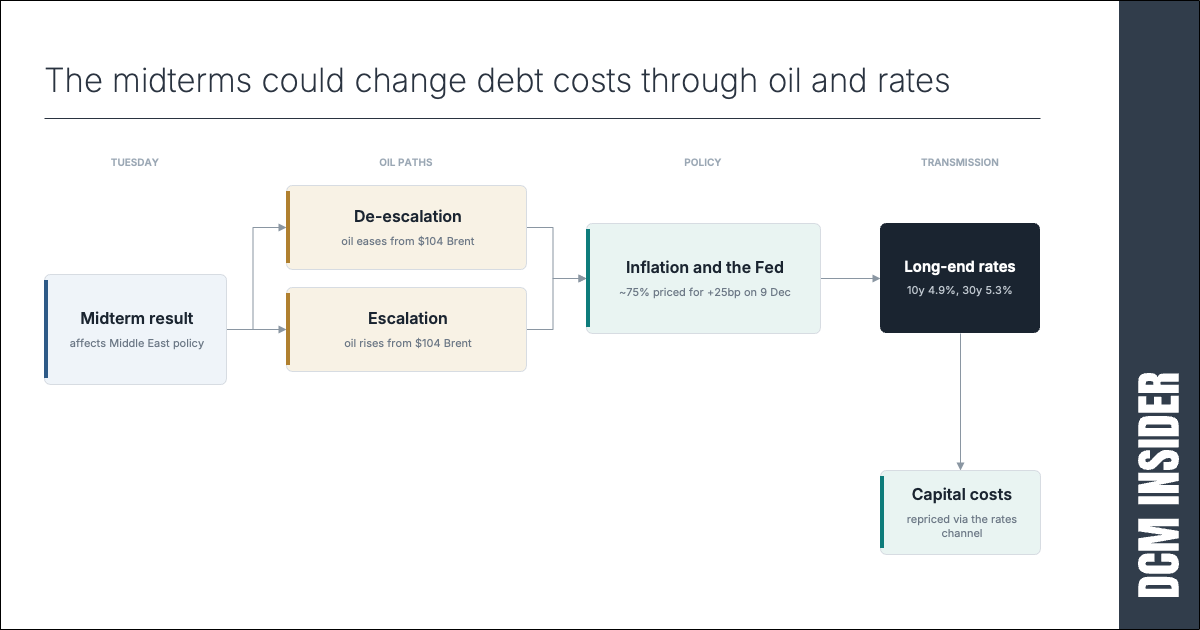
This has major implications for the debt capital markets – from inflation and rates effects from possible oil price reductions and tariff reductions, to changes in financial regulations affecting demand from different investor types.
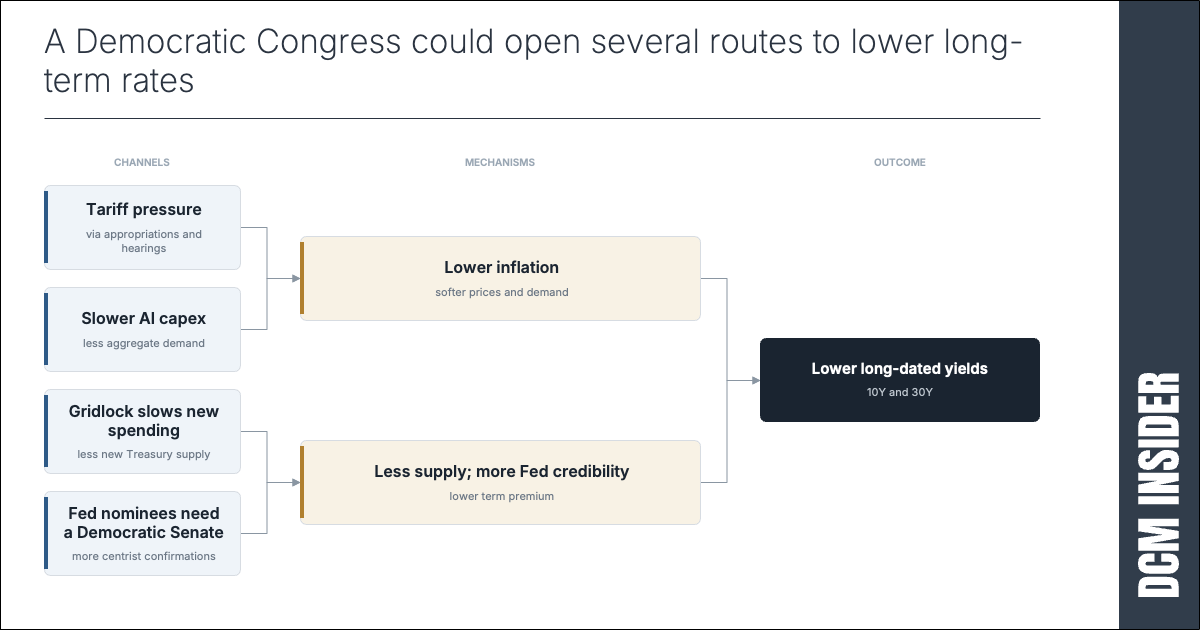
Beyond the direct voting ability that Democrats will have from their new seats, this was a significant signal that voters wanted change in policy by Republican politicians. This may therefore also affect the decisions made by Republican politicians due for election in 2028.
There is also a question about what will happen between now and the 3rd January when new members of Congress are sworn in. The “lame-duck” current session of Congress may work to get significant measures passed in this time. There is also a government funding (and shutdown) risk in December for debt capital markets participants to monitor.
In this article, we first run a small primer on who does what, and what practically changes here. We then list possible effects that are valuable for debt capital markets participants to be aware of.