Fed facing higher inflation
The Fed is facing higher inflation – which is becoming visible across inflation data that has been released over the last few weeks (CPI, PPI, PCE, etc.).
Economy faring well
The economy is faring relatively well – with employment statistics remaining robust.
This would usually have markets expecting relatively near term interest rate increases from the central bank.
Political considerations reduce likelihood of short-term rate increases
This is complicated in this case because there are political considerations that might make the Fed more averse to raising rates than it usually would be.
Could increase long-term rates by unwinding QE purchases
One approach that the Fed might use is to influence long term interest rates instead of influencing short term interest rates (the headline Fed funds rate).
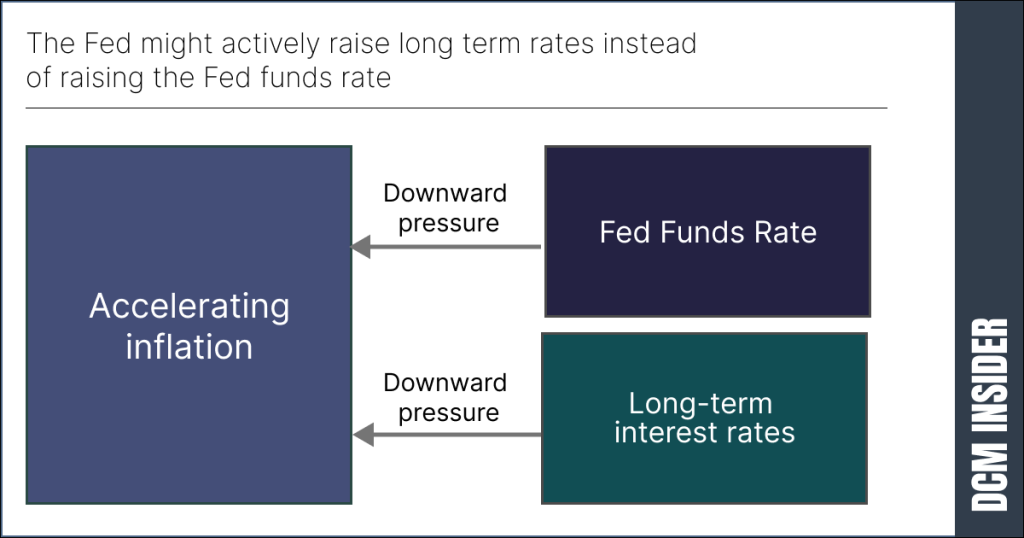
The Fed bought large quantities of long-dated Treasuries and mortgage-backed securities during quantitative easing in the 2010s. The Fed could raise long term rates by shrinking this balance sheet – either passively by not replacing bonds as they mature, or actively by selling outstanding bonds that it holds.
New Fed Chair Kevin Warsh is historically hawkish and has spoken about his view that the Fed balance sheet should be reduced to a normal level.
Might provide additional benefits by reducing the impact on consumption and employment
This type of long dated rate management by reducing the balance sheet – effectively quantitative tightening – could end up having benefits over raising the Fed funds rate. It could shrink aggregate demand to control inflation by disproportionately affecting investment (which is largely driven by medium/long term rates) rather than consumption (which might be more sensitive to short term rates) – which might help avoid the risk of a consumer-driven recession.
For credit issuers and investors – evaluate locking in medium/long-term rates now
For credit issuer and investors, the take away might be to consider this scenario – and if they consider it as likely, to evaluate the benefits of locking in long term rates now by issuing early or protecting their portfolios against losses from higher long term rates.