SRT trades expanding to Asia
Synthetic risk transfer (SRT) trades have grown rapidly in Europe and the US. They are now expanding in other regions.
What are SRT transactions
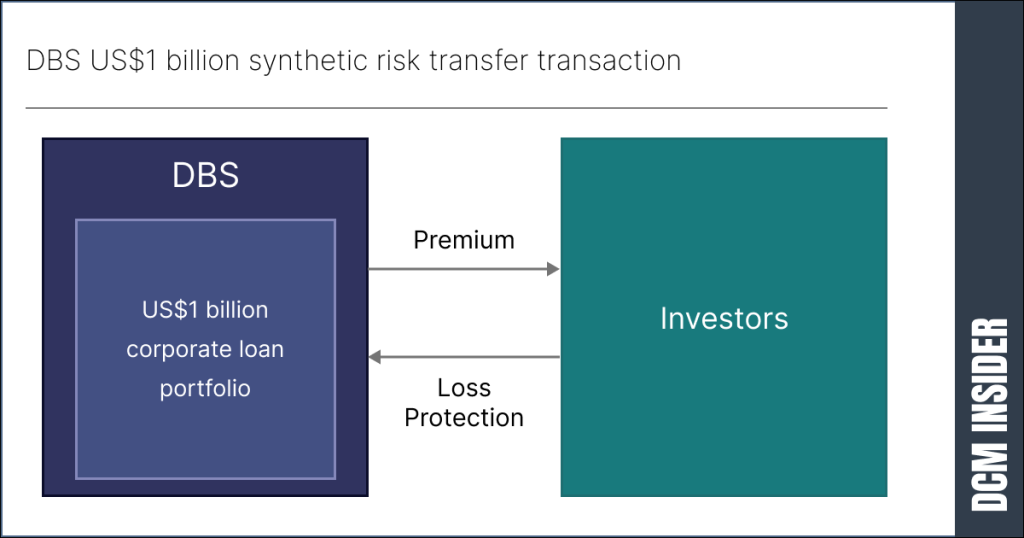
SRT transactions are similar to insurance – where investors agree to pay the issuer if they suffer losses on the “insured” portfolio. The issuer offloads risk, and because they have less risk they reduce the regulatory capital they need to hold.
An important precedent
This US$1 billion deal by DBS, Singapore’s largest bank, is an important precedent for SRT transactions in Singapore.
As the country’s largest bank, they are well placed to work with regulators to develop a template for this type of transaction – which other banks can follow.
Who is DBS
DBS is Singapore’s largest bank. Beyond Singapore, they have become a major Asian bank through acquisitions and organic growth. They now operate in 19 markets – including Hong Kong, China, Taiwan, India, Indonesia.
Reasons
DBS’s strategy is to grow in Asia.
SRT transactions allow them to grow their franchise (customer numbers, loan balances, etc.) without having to hold all the risk of these loans themselves. It splits the operational work of running banking/lending services for customers with the investment work of holding and managing the risk of the loans that the bank makes.
This type of transaction can help DBS to grow their lending business rapidly – while protecting their regulatory capital position and high ratings (Aa1/AA-).
More to come
DBS says that this deal sets a foundation for the bank to issue more transactions. There is significant potential here – as the bank has a loan book of over $300 billion.
This transaction
This transaction has a reference portfolio of US$ 1 billion of corporate loans.
Precedent for other banks
This sets an immediate precedent which other Singapore banks can use to upgrade their ability to lend to customers – and protect/grow their market share.
Fintech competitors are growing in the region, and the regulatory capital costs for banks can make banks uncompetitive in some cases. SRT trades help reduce that disadvantage, and unlock lending for the economy.
Precedent for other countries
This transaction provides a benchmark that other banking regulators in the region may use to enable SRT transactions by their banks.