Who – This is an issue for high yield bond, private credit, and leveraged loan investors.
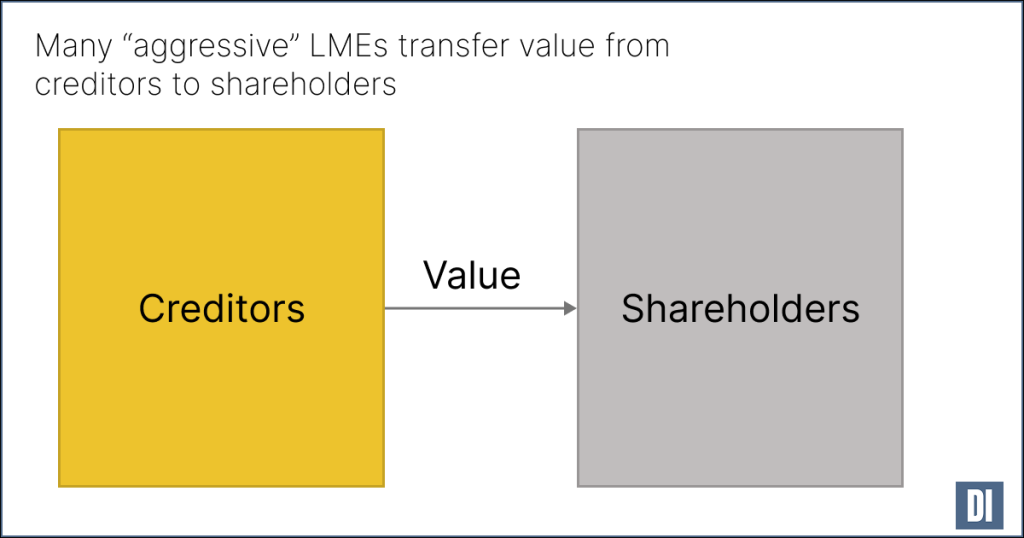
What’s happening – Stressed issuers are increasingly using “aggressive” liability management transactions that take value from creditors and pass it to shareholders.
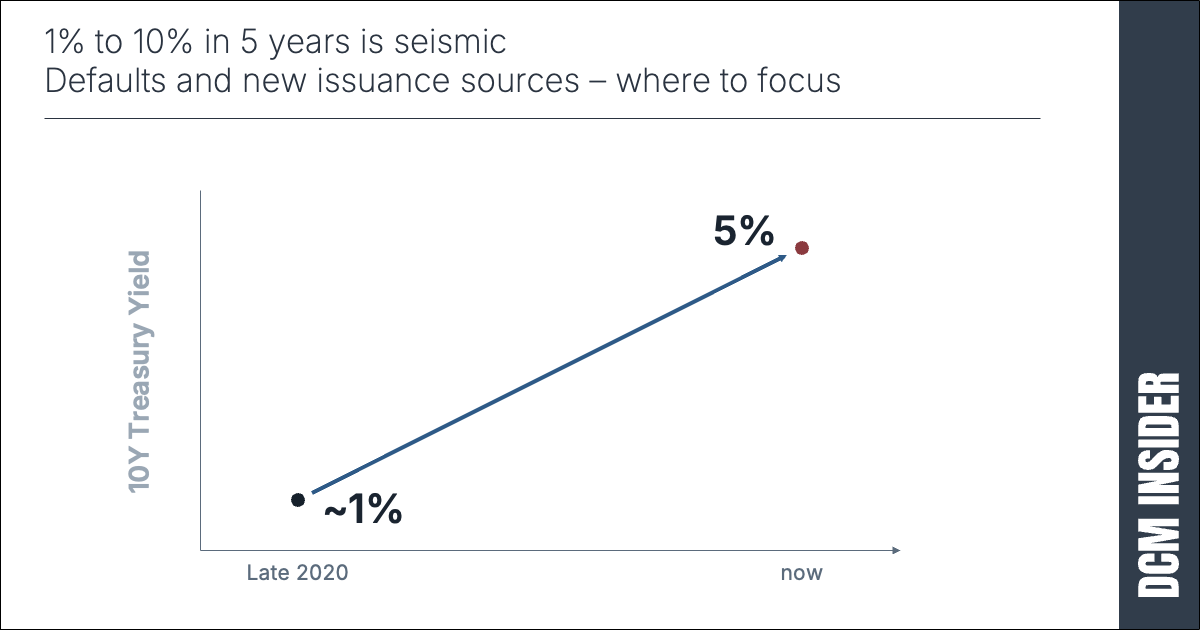
History – This has come about because a lot of currently stressed deals were issued during “ultra-low-interest-rate boom times” – when it seemed very unlikely that some of these companies would default, and so investors were willing to accept weaker covenant packages (which translate to lower recoveries in cases of default) in return for higher yields.
How – There are a range of mechanisms used by companies – including moving assets out of reach of creditors, buying debt from some creditors at a premium to others in exchange for cooperation that benefits equity holders, and raising new borrowings in ways that essentially dilutes existing creditors. Terms for these transactions include “Dropdowns”, “Uptiers”, “Double Dips”, “Triple Dips”, “Pari Plus” – essentially the exact mechanics of each does not matter for our context here – just that they navigate through legal documents to often transfer value from creditors to shareholders.
Some win-win situations – In some cases liability management exercises can be beneficial all-round – for example avoiding legal costs of a court restructuring or avoiding the reputational/brand harm from a high-profile court restructuring. This “saved value” can then be shared in some way between creditors and equity holders.
Recent deals – there have been a lot of liability management exercises in the last few years. It is most prevalent in the US, and growing in Europe. Some high-profile deals include ones by: J. Crew, Revlon, Chewy, Serta Simmons, Incora/Wesco Aircraft, Trinseo, iHeartMedia, Altice France, Pluralsight, Envision Healthcare, Carvana, DISH Network, Hunkemöller, Lumen, Sabre, Spirit Airlines.
Implications for investors – Investors should be aware of companies that they have exposure to that could end up stressed, assess the type of liability management exercise that could be open to them, assess the economic cost to them of such an LME, and assess how likely it is that the company would do that. Investors can then consider whether they want to continue to hold that credit, and if so whether they need to take action to protect themselves.
Investor protections – Investors may in some cases be able to preempt this type of exercise by maintaining a close relationship and strong dialogue with company management and its sponsors. Creditors have also started forming clubs – in some cases with legally binding cooperation agreements between lenders to avoid creditor-on-creditor violence (where the company can work with one group of creditors at the disadvantage of another). This is all legally complex and might be best suited to specialist investors in many cases. Cooperation agreements have also recently been legally challenged in some cases as a form of “illegal cartel”.
Distressed investor opportunities – The complexity, legal costs, and potential reputational costs of working through these LME exercises as an investor can result in some original investors wanting to sell this type of exposure. Specialist distressed investors may in some cases be paid well for being able to work through deals in detail to identify value, and to navigate through any LME process. There are also active strategies being run by some investors like the “Hunter Gatherer” strategy – where an investor “hunts” (buys) enough existing debt in the secondary market to help approve a debt change proposal by the borrower, and then “gathers” (exchanges) those holdings into a higher value instrument with the borrower.