Meta and BlackRock priced a $12.5 billion bond deal – to build a large data center in Texas. Lower demand than for previous deals is a data point that suggests capacity saturation as investors start to look at concentration limits on their AI-related exposures.
The deal
Meta and BlackRock priced a $12.5 billion bond deal yesterday (27th July) – to finance a 1 GW data center in Texas. They issued this bond through a joint venture called Sopaipilla – 80% owned by BlackRock and 20% by Meta.
By entering into this structure with BlackRock, Meta is able to keep this debt off its balance sheet – while still being able to secure AI-compute capacity for its AI buildout.
The reception
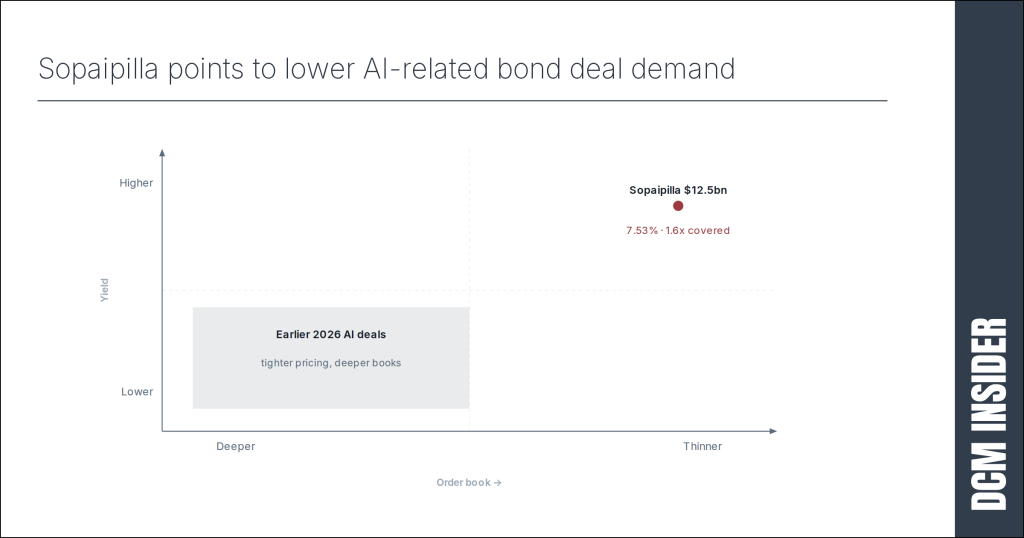
The deal cleared but saw lower demand than previous AI bond deals – with 1.6x coverage. Pricing is also reported not to have tightened from initial price talk – which suggests a relatively weak book.
With over $350 billion in AI-related bond issuance so far this year, this seems to be investor indigestion – as investors worry about concentration limits, dry powder for future deals – as well as possible bubble risk.
The bonds priced at a yield of 7.53% – one of the highest rates among similar deals.
The parties
Meta – the sole lessee. Starts with a four-year term, and then has options to extend for additional periods – up to twenty years. Meta also provides a residual value guarantee – which increases the likelihood that Meta will keep renewing the lease, and provides a payout if it does not.
BlackRock – through funds of subsidiaries Global Infrastructure Partners (GIP) and HPS – own 80% of the joint venture (Sopaipilla).
Likely to be a market-wide issue
This lower level of AI-related debt demand is visible across the market – including in other new issues and secondary market pricing.
Given the massive upside that technology firms are projecting from their AI businesses, it is possible that they continue to issue – happily paying increasing yields to be able to secure more AI capacity.