In short:
Inflation and rates up. Markets still wide open. Potential cracks forming – interest rates up, credit spreads for low-rated issuers increasing. Sophisticated issuers are issuing large deals and locking in future capital needs now.
Top talking points:
- The high-oil-price effects of the Iran war remain the biggest factor affecting pricing and liquidity in the debt capital markets: There have been announcements that there might be a resolution but that it is not certain. Even if there is a resolution now, there may be a large amount of inflation already baked into the economy as a result of high oil prices for the last three months – and this might need higher rates to control. If there is not a resolution, there is a chance that we get runaway inflation like we saw in 2021.
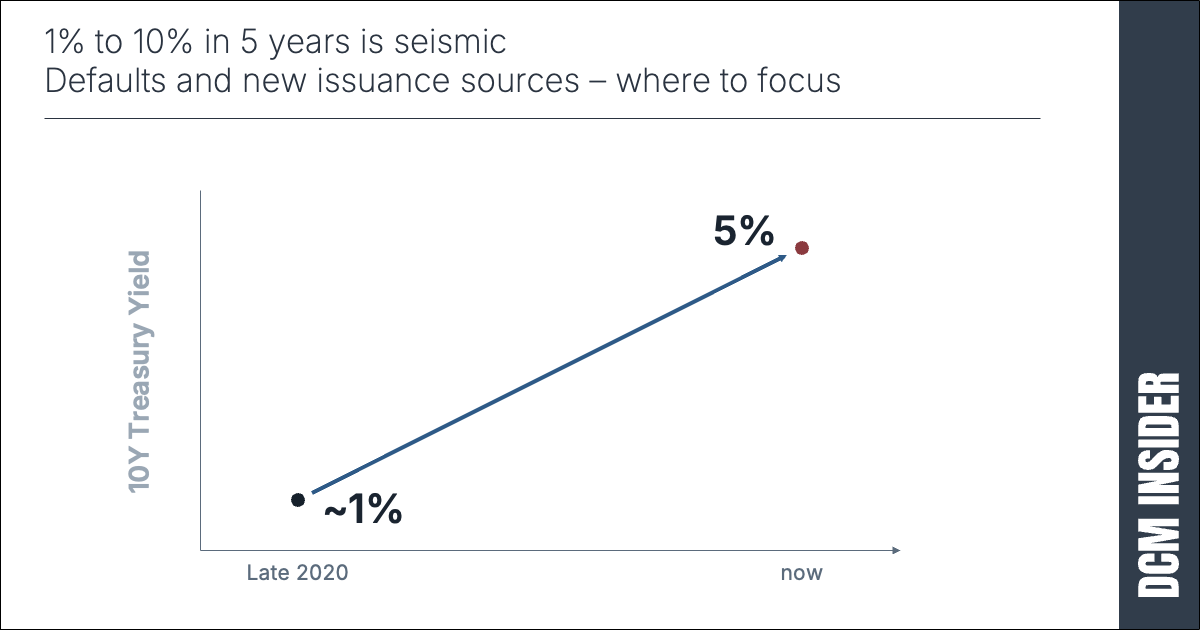
- Potential for much higher long-term borrowing costs as the Fed makes a major paradigm change: Long-term interest rates were heavily suppressed after the 2008 global financial crisis because of governments buying long-term bonds (quantitative easing/QE). This reduced long-term bond yields. The Fed (and governments elsewhere in the world) has been reducing QE over time – and the swearing-in of new Fed Chair Kevin Warsh last week has a meaningful chance of accelerating that. He has said that he wants to shrink the size of the Fed’s balance sheet. It also gives him a tool to tackle rising inflation without aggressively raising the Fed’s headline (short-term) rate. The US 30-year Treasury is now yielding 5.1%. The upshot for issuers is that the costs of long-term borrowing may increase significantly.
- High rates driving strong demand for high-grade credit: High rates are bringing absolute yield buyers into the market – allowing investors to earn over 5% on high-grade bonds. This creates an excellent window for issuers looking to lock in funds and de-risk.
Primary markets:
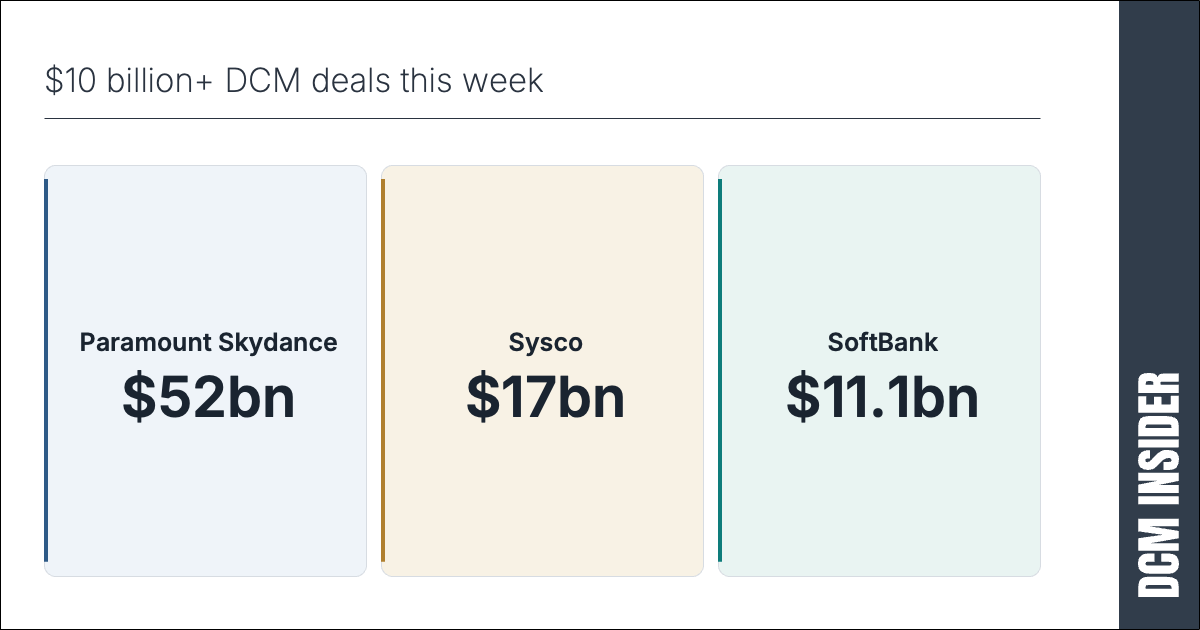
Public – High levels of issuance globally. Deals included Pharma company Merck ($6 billion), water treatment company Ecolab ($5 billion), agri-sciences company FMC Corp ($1.2 billion), Volkswagen (€2.75 billion), Enel (€2.5 billion), BNP (€2.25 billion), Indonesia (€3.5 billion), Morocco (€2.25 billion), Barclays (£750 million), Adidas (€500 million). Many of the largest deals are to fund acquisitions.
Private – Markets open with large amounts of raised capital to deploy. Barings raised $19 billion for its global direct lending strategy – growing Barings’ total private finance AUM to $67 billion.
Asset-backed – Markets open, though investors seem to be differentiating more based on asset/structure quality/risk. Increasing shift to private-markets funding of deals. Deals included a CLO from Sound Point (€400 million), an RMBS from Onslow Bay ($500 million), an SRT from Allica Bank (£350 million), a deal by One William Street Capital to buy loans from Affirm ($1.5 billion), and a deal by Nuveen to buy ATV and other recreational vehicle loans from Octane ($350 million).
Quotes of the week:
“Members … would be prepared to adjust the stance of monetary policy as appropriate if risks emerged that could impede the attainment of the Committee’s goals. Members also agreed that their assessments would take into account a wide range of information, including readings on labor market conditions, inflation pressures and inflation expectations, and financial and international developments.”
FOMC Minutes. This might suggest more pressure in the committee to shift towards tightening to control inflation than the market currently believes.
What to watch this week:
- Iran war: Any major developments in the Iran war are likely to move rates and credit markets. Given the complexity of the situation – the issues at play and the complex incentive sets of the large number of parties involved – it seems difficult for market participants to predict these developments. In many cases, investors and issuers might find it best to find ways to protect themselves from these external factors that are outside their control – and focus on creating value from their core strengths of credit assessment for investors and their businesses for issuers.
- Kevin Warsh: Kevin Warsh was sworn in as Fed Chair last week. He might start to make comments that are unexpected by the market. It is worth considering that he has historically been hawkish. One possibility is that he works to tighten the long end of the curve by shrinking the Fed’s balance sheet – allowing him to shift up the yield curve to contain inflation without facing political pressures to avoid increasing the Fed funds rate.
- US inflation data: US April PCE data is released on Thursday. If this continues the trend we have seen of higher inflation surprises to the market – this could raise rates.
Key data points:
US IG issuance to the end of April: $1 trillion. Up almost 30% YOY as issuers lock in funds.
Oil Price (Brent Crude): $100. Down $9 on the week – on statements about a possible peace deal. Oil prices elevated since the start of the war at the end of February. The longer they are elevated, the more that higher energy prices feed into higher prices for other products and services – as well as potentially feeding higher inflation expectations.
UST 10-year: 4.6%. Flat on the week.
UST 30-year: 5.1%. Flat on the week. Still around 2-decade highs. Compare with this rate being 1.2% in 2020.