There are questions about concentration and correlation risk. AI-related companies are clearly using the money for something that adds value to the economy – but the business models are new, untested and uncertain.
Backdrop
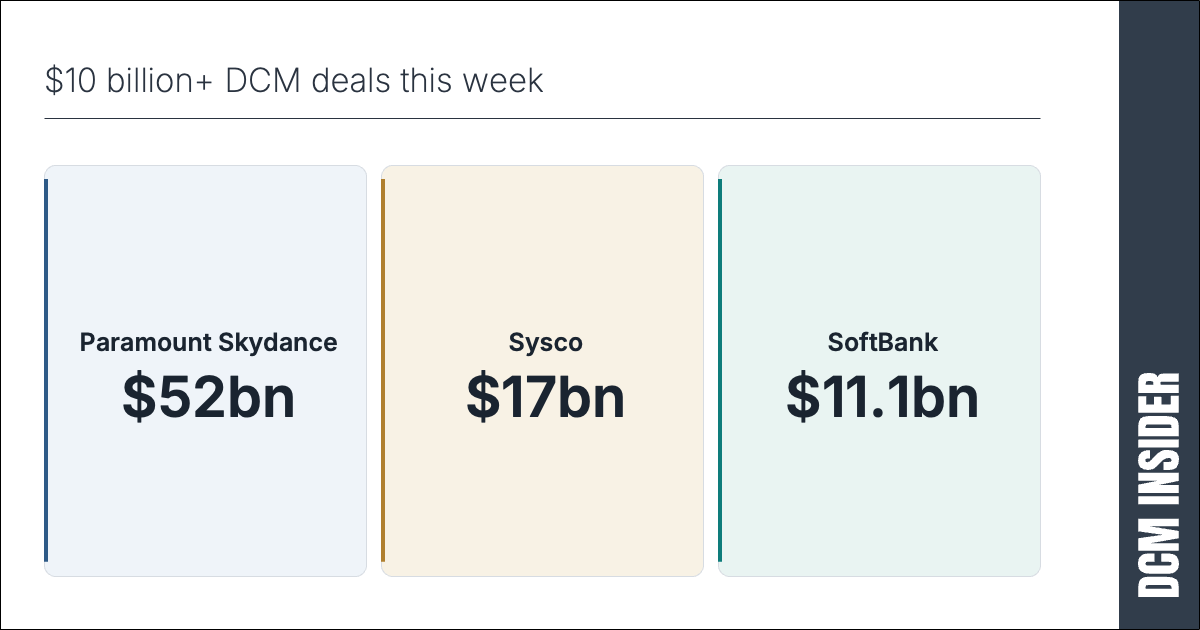
We have had massive issuance this year from AI-related companies – over $200 billion from the hyperscalers and hyperscaler-adjacent companies: Amazon, Alphabet, Meta, Microsoft, Oracle, NVIDIA and SpaceX.
New issues printed but secondary market weakness: The new issues have been reported as highly successful – with high levels of oversubscription. A couple of the recent deals – notably the SpaceX deal – have priced wider than previous deals. Secondary market spreads also widened last week on SpaceX and NVIDIA bonds.
The risks
The big risks here are: 1) a lack of demand capacity – creating market technicals driven spread widening; 2) concentration risk – where investors and banks find they are holding much more exposure related to a specific risk (datacenters achieving their projected cashflows without something going wrong); 3) known and unknown unknown risk of a new business model – we think we understand the AI compute provision business model, but this is new and as with anything new there can be things we don’t anticipate – this could fall into something technological (like a new type of processor/AI model technology that makes prior generation infrastructure far less valuable, increased international competition, or something else that is truly an unknown unknown).
Low spreads create asymmetry
With spreads being so tight, this risk may in many cases be asymmetric – especially given the long (30 year+) tenors of some of these bonds.
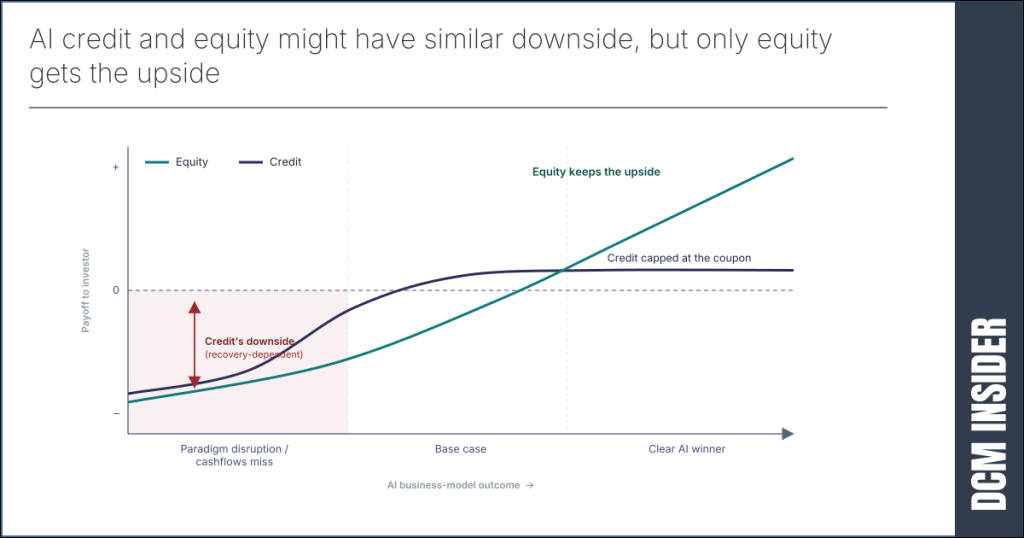
Equity style risk for credit style reward: A number of investors have commented over recent weeks that equity might be the place in the capital structure to play for AI-related risk – where as credit investors you are buying a “story” of how the future maps out without the upside, and for currently a relatively low credit spread.
Hyperscaler risk
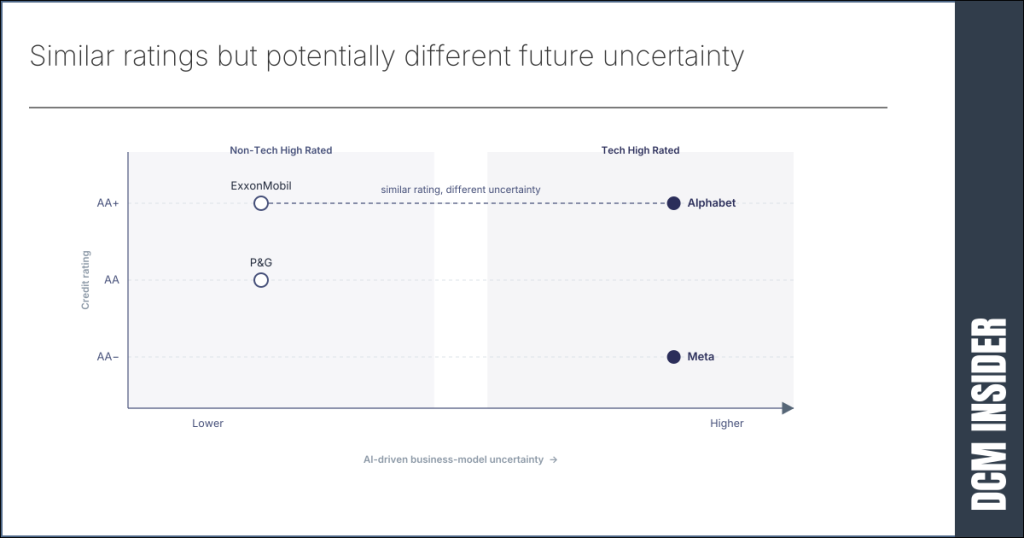
Many of these deals are backed by highly-rated companies with low credit spreads. But many of these companies are the front line of AI both destroying their previous business models, and at the front line of developing and working to capture value from the opportunities that AI unlocks. There is therefore a risk that credit ratings for these companies may be backward looking and may not reflect this current major (and unknown trajectory) inflection point for these companies. This is especially important given the long tenor of many of these bonds. This paradigm change seems to create much more uncertainty (both positive and negative) for a company like Alphabet (AA+) or Meta (AA-) than it does for ExxonMobil (AA+) or Procter & Gamble (AA). The negative uncertainty is what matters for credit holders. The positive uncertainty is valuable for equity holders.
Credit-issuance is potentially exceptional value for companies and equity holders
Given the size of potential upside to companies from becoming “winners” in the new AI-powered economy, and given that this outcome might be binary/step-wise rather than a smooth curve of possible outcomes, issuing credit might be exceptionally valuable for equity investors – as if this is the case, equity investors might be getting equity-type risk coverage to boost their returns while only needing to pay credit-level fees for this capital at especially low rates given the potentially backward-looking credit ratings of their companies.
Deals are not created equal
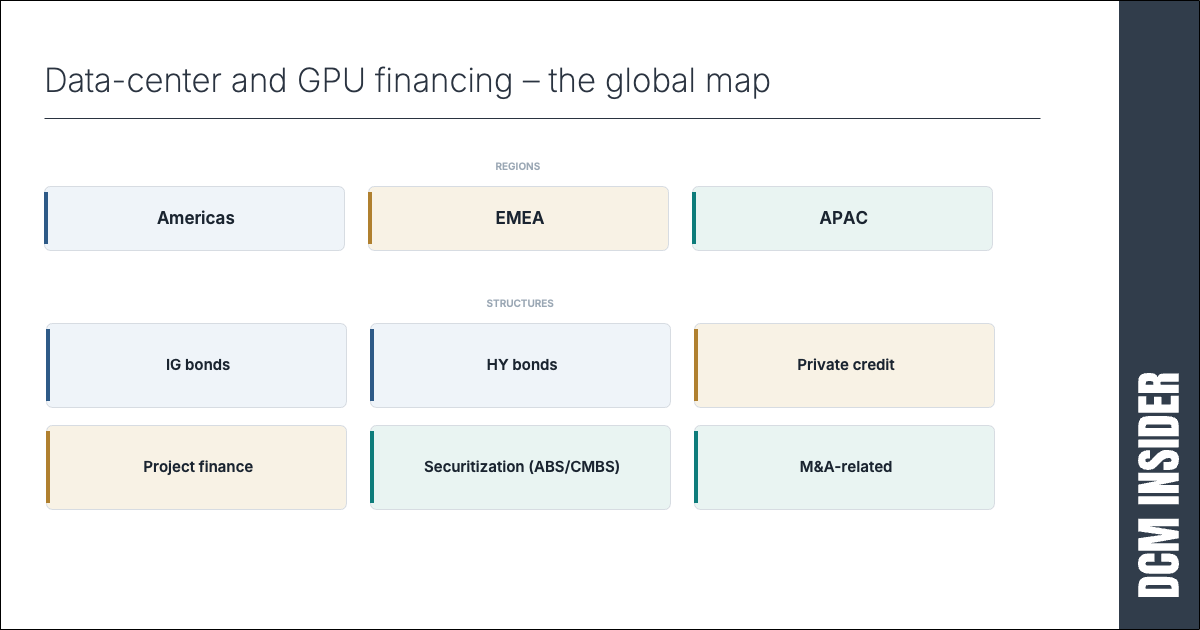
Asset-backed deals and shorter duration deals may provide additional value to credit investors. Within those, there will also be significant differences – with, for example asset-backed deals secured by GPUs being very different to asset-backed deals secured by real estate where the real estate is truly valuable even if it not used as a datacenter.
Risk of near-term price weakness
Global investor demand saturation could result in near-term price weakness. The untested nature of this risk creates some long-term credit risk – but given the size and correlation of this issuance, if this risk does materialise it could result in significant global losses.