In short:
Inflation and rates are up – with 30-year rates now at their highest level since 2007. Credit markets are still functioning very well – with a lot of new issuers this week. Issuers may want to consider locking in their funding needs soon to avoid the risk of having to pay higher rates.
Top talking points:
- Higher inflation data gets investors focusing on higher-rates risk: April CPI printed at 3.8% and PPI at 6%.
- Long-term rates increased rapidly: 30-year treasuries are now 5.1% – the highest rate since the financial crisis. This increases the hurdle at which long-term investments are feasible. In comparison, 30-year rates were as low as 1.2% in 2020.
- Credit demand is excellent – but supply might start to fall with higher rates: Credit demand is strong – we are seeing high levels of oversubscription for high-quality credits. Absolute return investors like higher rates. But credit supply might fall as rates increase – as fewer investment projects make sense for companies at higher rates.
- New-issue maturities may shorten: As 30-year and 10-year rates increase, we may see issuers focus on borrowing for shorter maturities of 3 to 7 years rather than locking in higher long-term rates.
- Risk of rapid high-grade/high-yield divergence: Demand is strong for high-grade issues as absolute return investors are attracted by high interest rates. But if we start to see economic weakness (unemployment, worsening consumer sentiment, lower spending, etc.) we could see a rapid flight to quality with investors selling lower-grade credits.
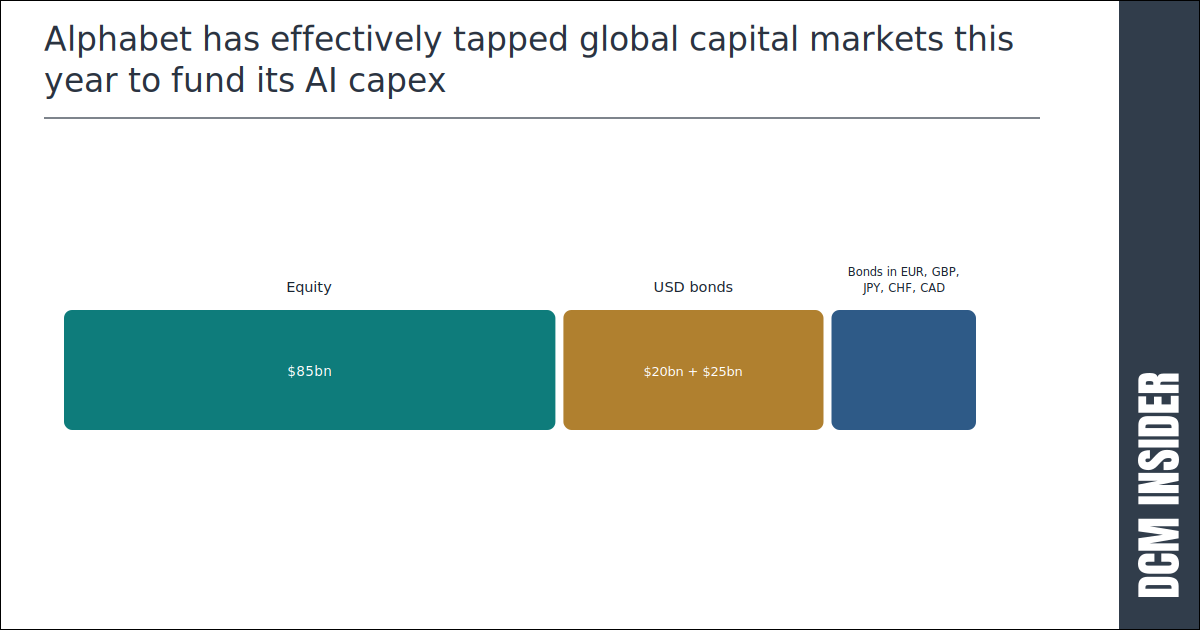
- Hyperscalers are issuing more international bonds: This week saw a JPY 600 billion bond from Alphabet and a CHF 3 billion bond from Amazon. Alphabet’s JPY deal is the largest ever yen deal by a non-Japanese issuer. Given their capex needs, hyperscalers will need to continue to raise across as many markets as possible to avoid hitting investors’ concentration limits in any single market.
- The Fed might raise long-term rates instead of the fed funds rate: The new Fed chair Kevin Warsh has spoken about shrinking the Fed’s balance sheet. This could increase long-term rates (for example if the Fed sells 3-, 10- and 30-year bonds that it holds) – which could help reduce inflationary pressures (by reducing longer-term investment spending) without hurting consumers as much as an increase in the fed funds rate might do (as higher a higher fed funds rate would more directly affect credit card rates and personal lines of credit). This “quantitative tightening” might allow the Fed to control inflation while avoiding political constraints around raising the fed funds rate. Issuers who see this as a potential scenario might want to lock in funds soon – as the steeper yield curve that this could create might be expensive.
Primary markets:
Public – plenty of demand for high-quality credits. Bond deals include Wells Fargo ($6 billion), Alphabet (JPY 600 billion), Amazon (CHF 3 billion), Verizon ($4 billion), and ServiceNow ($4 billion). Strong demand – the ServiceNow deal was reportedly 10x oversubscribed.
Private – markets open. Citi and BlackRock’s private credit business (HPS) entered a deal to lend €15 billion to companies in Europe over five years – with Citi using its relationships to originate deals, and HPS bringing the money. S3 Capital closed an $850 million fund to provide construction loans. Antares closed an $8.5 billion senior loan fund – to lend to US and Canadian companies.
Asset-backed – strong investor demand. Deals include a $1.9 billion office CMBS by Brookfield and QIA for Two Manhattan West, a $950 million auto loan ABS by JPMorgan, a €400 million CLO from Blackstone, and a €360 million CLO from Bain Capital.
Quotes of the week:
“Markets are starting to price the Fed having to work harder to tamp down inflation”
Ed Al-Hussainy, Portfolio Manager at Columbia Threadneedle
“More than ten weeks after the war in the Middle East began, mounting supply losses from the Strait of Hormuz are depleting global oil inventories at a record pace”
International Energy Agency Report
What to watch this week:
- Any statements about balance sheet reduction: As Kevin Warsh becomes Fed chair, watch for any statements about Fed balance sheet reduction – which could in turn increase medium and long-term interest rates.
- Iran war: There is a new push to find an agreement for the Iran war. If there are material developments/news this could materially move the market.
Key data points:
Oil Price (Brent Crude): $109. Up from $103 on the week. Oil and gas prices have been elevated for almost 3 months. The longer they are elevated, the more that higher energy prices increase the price of other products (which energy is an input for) – including chemicals, logistics and manufacturing.
US CPI: 3.8% (April YoY) – well above Fed’s 2% target. This may echo higher oil price inflation translating into higher core inflation in the 1970s – with energy prices feeding into other products.
US PPI: 6.0% (April YoY). Can be a good leading indicator for CPI – as producers pass on price increases first. This could suggest CPI moving higher again for May.
UST 10-year: 4.6%. Up from 4.4% on the week.
UST 30-year: 5.1%. The highest level since 2007. Significantly changes the nature of the economy – which types of investment “work” at this cost of capital. In comparison, the 30-year treasury rate was as low as 1.2% in 2020.
Advertisement