In short:
Credit markets are positive – with record levels of new issuance and close to all time low spreads. It seems to be an excellent window for issuers to lock in their funding needs, and for investors who want to reduce/resculpt their risk profiles.
Top talking points:
- Experienced borrowers locking in funds: Large deals from Alphabet, Eli Lilly, Saudi Arabia’s Public Investment Fund, HSBC, Westpac, Morgan Stanley. The fact that large issuers are taking this window to lock in funds might be a valuable signal for other borrowers to consider.
- Good jobs data increases chances of rate increases: Non-farm payrolls data came in better than expected. As the Fed needs to contain inflation while protecting employment – good employment data reduce the “rock and hard place” problem for the Fed. If inflation starts going higher because of higher oil prices (that we have already had for over 2 months now), the Fed may be forced to raise rates.
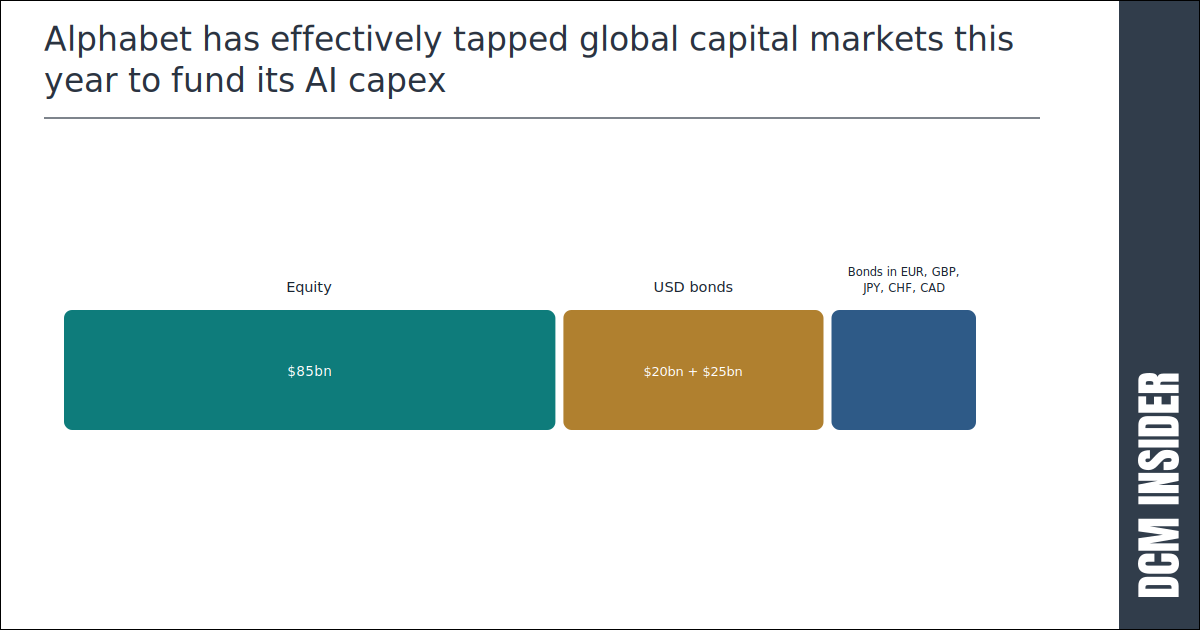
- Hyperscalers are broadening their issuance across credit markets: Alphabet sold €9 billion in euro bonds and its first ever Canadian dollar bonds (C$ 8.5 billion). We expect a lot more international issuance by hyperscalers – as well as issuance in other credit markets (securitisation, private credit and leveraged loans) – as their capex needs are too large for any one market to absorb. This will likely have second order effects on these other markets – including increased competition for other issuers in these markets, and improved market liquidity
- Warsh to run down the Fed’s balance sheet – which may increase long-end rates and credit spreads: Kevin Warsh is expected to be confirmed as Fed chair this week. He wants to reduce the size of the Fed’s balance sheet – potentially selling long term bonds that the Fed has bought. This could increase the supply of long term bonds in the market – increasing long term interest rates and credit spreads.
Primary markets:
Public – positive and active. Large bond deals from Alphabet (€9 billion and C$8.5 billion), Eli Lilly ($9 billion), Saudi Arabia’s Public Investment Fund ($7 billion), HSBC ($4.5 billion), Westpac ($4 billion), Morgan Stanley ($3 billion).
Private – markets open. Focus shifting from mid market direct lending to other strategies including asset-backed finance, real estate and investment grade. Apollo closed a $1.9 billion opportunistic private fund that targets market dislocations – from pension funds, financials, endowments, foundations and family offices.
Asset-backed – primary markets wide open as private credit increases demand competition. Soloviev raised $1.8 billion against a New York office tower from Bank of America, Wells Fargo, Citi at 4.9% (5 year). SKY Leasing priced an $813 million aircraft lease-backed ABS. Triton priced a heavily oversubscribed $350 million shipping-container backed ABS with a total order book of $1.7 billion – pointing to strong investor demand. Fair Oaks priced a €380 million European CLO at tight spreads across the capital structure – pointing to strong investor demand.
Quotes of the week:
“There’s always a risk of rate hikes when inflation has gone above target, and it’s been persistently above target now, and the labor markets are strong. And there’s signs that the labor market weakness that we were worried about just three or four months ago is largely dissipating.”
Ken Griffin, Citadel CEO
“We believe periods of volatility and dispersion create compelling opportunities for capital providers who are prepared to act decisively.”
Chris Lahoud, Apollo Partner – on the closing of their new $1.9 billion private credit fund that targets market dislocations last week.
Key legal and regulatory:
FSB Report on Private Credit Risks: The Financial Stability Board (the international body established after the 2008 global financial crisis that monitors the global financial system) published a report that talks about risks from contagion risks (because of bank lending/other credit exposures to private credit, insurer exposure to private credit, and private equity interconnectedness), credit quality worries and valuation errors/opacity. A key point is that private credit in its current form is new – and untested during a prolonged economic downturn. This will feed into how regulators around the world look at private credit – including potentially more closely monitoring regulated bank risk to private credit. The end effects might be limited given the broader value the private credit creates and a current environment of global financial markets deregulation/international competition.
What to watch this week:
- Iran war: The situation has been relatively stable over the last week. There seems to be an interest from all sides (for varying reasons) in continuing the ceasefire. But if we see a change – that could affect oil prices and then credit markets.
- US Inflation: US CPI data for April is released on Tuesday. PPI is released on Wednesday. This could move markets a little – though given the current robustness of markets, it seems unlikely to affect markets too much unless there is a large overshoot/undershoot.
Key data points:
Oil Price (Brent Crude): $103. Down from $113 on the week. Has now been elevated for over 2 months (from around $70 in February).
UST 10-year: 4.4%. There is a chance that this increases as Kevin Warsh becomes Fed chair and starts reducing the Fed’s balance sheet (potentially selling bonds).
Short reads:
A 1-minute summary of the FSB report on vulnerabilities in private credit: https://www.fsb.org/2026/05/report-on-vulnerabilities-in-private-credit/
Advertisement