In short:
Markets continue to be positive, but meaningful risks exist for issuers and investors. Risks include higher oil price effects of the Iran war, inflation, higher interest rates, contagion from private credit bad loans, new policies before midterm elections, and large new issue supply from hyperscalers.
Top talking points:
- Protection from external events: External events mean credit investors and issuers may want to de-risk. There are risks (both downside and upside) from external events including the effects of the Iran war on oil prices. Investors and issuers may want to look for ways to protect themselves from some of these events. Positive news around the Strait of Hormuz may create good issuance windows.
- Borrowers locking in funds: The week saw issuers continue to lock in funds. This included a $25 billion bond deal from Meta and a $6.5 billion bond deal from Intel.
- Interest rates up: There has been a shift from expecting interest rate cuts to potential interest rate increases. Higher inflation numbers and low unemployment create conditions in which the Fed may begin to raise rates.
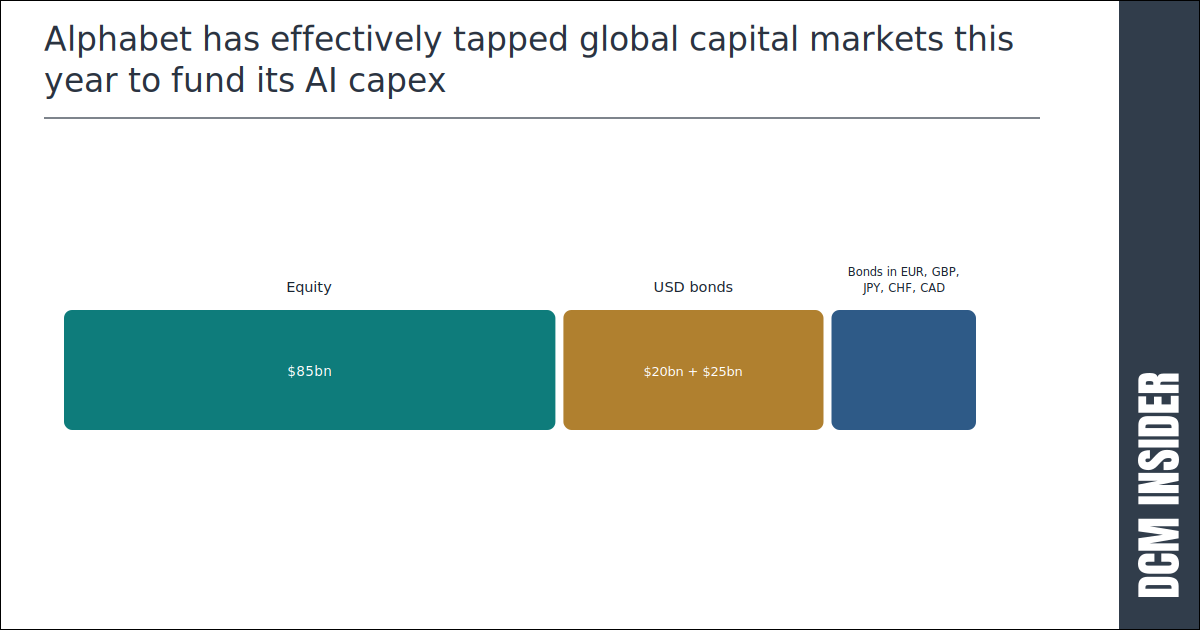
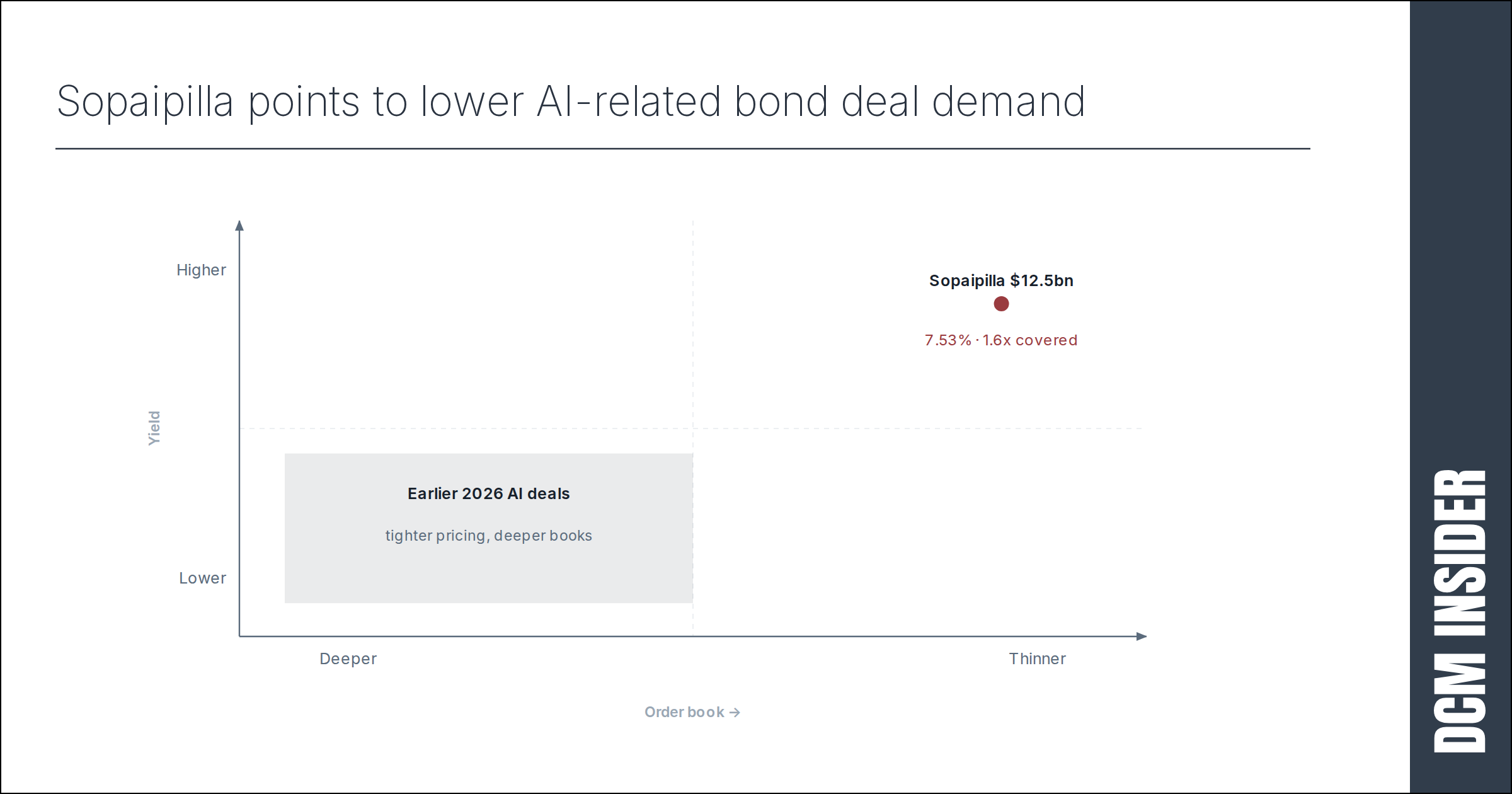
- Massive hyperscaler credit supply is changing the credit markets: New issue supply from the hyperscalers (the largest cloud computing providers including Amazon, Microsoft, Google, Meta, Oracle) is a massive new source of supply for the credit markets. We are starting to see signs of credit markets finding it difficult to absorb all this extra supply – for example Meta’s $25 billion bond this week priced at a higher spread than its October 2025 deal. Expect increasing hyperscaler credit issuance across bonds, securitization, private credit and leveraged finance.
Primary markets:
Public – positive and active. Large bond deals from Meta ($25 billion), Intel ($6.5 billion), Walmart ($4.25 billion), JPMorgan ($3 billion), BBVA ($2.25 billion).
Private – Markets remain open for most categories. Primary Wave (partly owned by Brookfield) closed a $2.2 billion music royalties fund (upsizing from its initial target of $1.5 billion). This points to strong demand for asset-backed private credit. The investor base was broad – insurance companies, pension funds, endowments, large family offices.
Leveraged finance – Active, open markets. Data centre operator Coreweave launched a $3.1 billion broadly syndicated deal. The deal is marketed as a GPU financing – with the loans backed by customer contracts for AI data center capacity. M&A related leveraged finance markets open – with BASF Coatings launching a $2 billion loan sale to finance its acquisition by Carlyle and Qatar Investment Authority.
Quotes of the week:
“The way it’s going now, there will be some kind of bond crisis, and then we’ll have to deal with it … We haven’t had a credit recession in so long, so when we have one, it would be worse than people think.”
Jamie Dimon, JPMorgan CEO
“..nearly half of euro area banks reported using either traditional or synthetic securitisation. Synthetic significant risk transfer (SRT) is the most commonly cited form of securitisation deemed important by euro area banks, followed by non-SRT traditional securitisation and SRT traditional securitisation.”
ECB Report
What to watch this week:
- Strait of Hormuz developments: We are likely to see some changes in the Iran war this week which will affect credit markets. How high oil prices get, and how long they stay high is potentially the most important driver for fixed income markets – for interest rates, default rates, and credit spreads.
- Nonfarm payrolls on Friday: These will affect dialogue around interest rates by the Fed and by traders. A strong economic print (low unemployment) could increase interest rates.
Key data points:
US PCE Inflation: 0.7% for the month of March (up from 0.4% for February). This is a high reading, and a large increase.
Oil Price (Brent Crude): $114. Up from $104 on the week.
$700 billion+: New (increased) capex projections from hyperscalers announced in their recent earnings reports. Much of this will likely be funded with bonds, securitisation, private credit and leveraged loans.
UST 10-year: 4.5%. Up around 0.1% on the week
Short reads:
A short note from S&P on how the duration of the Strait of Hormuz closure will affect credit quality across industries and geographies: https://www.spglobal.com/ratings/en/regulatory/article/creditweek-what-does-the-fragile-middle-east-ceasefire-mean-for-credit-s101683316
Advertisement