It is difficult to predict the outcome of this complex situation. For credit issuers and investors, this outcome is outside their control and their credit underwriting edge – suggesting this might be an opportunity to de-risk from some scenarios.
Difficult to predict. Potential for a peace deal. Potential for worsening.
It seems difficult to clearly predict the future path of the Iran war. There is a chance of a rapid peace deal, but there is also a chance of a major re-escalation. Issuers and investors might want to find ways to de-risk themselves from this major variable for the debt capital markets that is out of their control.
Complexity makes the system less stable and prediction more difficult
The difficulty is that this is a very complex situation – with a number of countries involved, and a very complex and high-stakes set of political and other considerations for many of the involved parties. This complexity creates a risk that a deal might not be found quickly – and both sides have made statements to the effect that they are ok to not reach a deal quickly if they do not see it as the right deal.
Higher oil prices, inflation, interest rates
This war has major implications for the debt capital markets – both for rates and for credit. The most reported effect is higher oil and gas prices globally with the near and long term restrictions on shipping through the Strait of Hormuz being unknown – and the knock-on effects of those higher energy prices on inflation and economic activity. Other effects include lower supply and higher prices for other input materials like fertiliser (needed for global food production) and helium (which is an input for semiconductor manufacturing).
Rates higher
The overall effect on rates has been that we are seeing higher interest rates across the yield curve.
Risk of credit impact
There is an increasing risk that the economic disruptions of the war cascade into causing direct damage to countries’ and companies’ income – in turn reducing their ability to service debts that they have.
Effect contained so far and markets functioning well
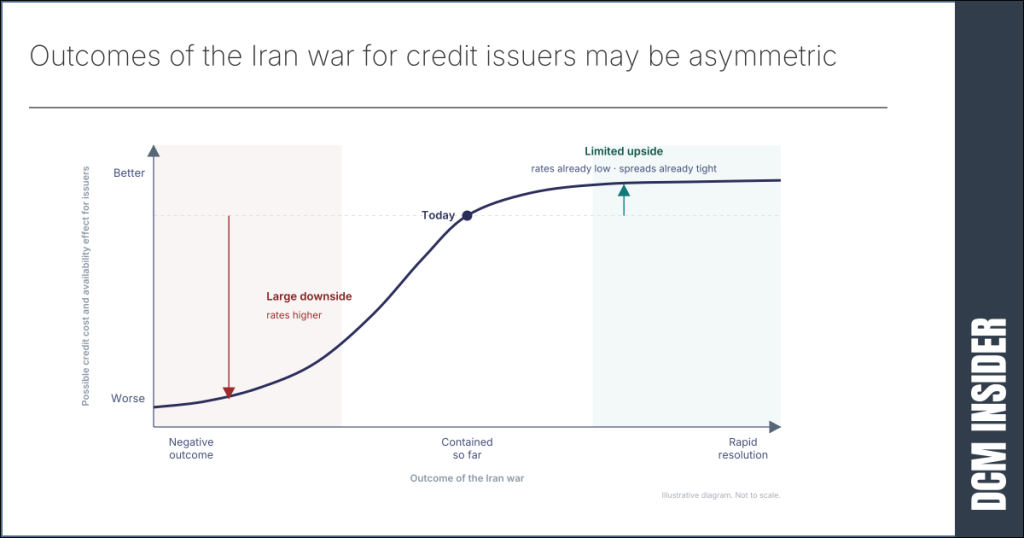
The effects have been relatively contained so far – but if a resolution is not found soon – or if the situation worsens, there is a chance that the effects on rates and credit could be much larger.
A major positive for issuers and investors is that markets are functioning very well – rates are still not very high, and credit spreads are very tight. This provides both issuers and investors with an excellent opportunity to de-risk.
Normalisation could be swift if there is a resolution
There is of course a meaningful probability that the Iran war is resolved fully very quickly – and many of the effects of the war are relatively quickly reversed (oil and gas tankers start to sail through the Strait of Hormuz again, etc.) – and that could support lower rates and even tighter credit spreads.
Asymmetry of effects for issuers and investors
But the consideration here is whether the upside/downside of a resolution/no-resolution outcome is highly asymmetric for credit issuers and investors. If things worsen, there seems to be a chance that rates could move much higher and credit spreads could widen by hundreds of basis points. But if things are resolved, because rates are still relatively low and because credit spreads are already so tight, there seems to be more of a limit on how much better they can get for credit issuers or for investors.
This outcome falls outside the control of issuers and the credit underwriting competency that creates alpha for investors
Beyond this, major and difficult to predict external events are outside of the issuer’s or investor’s core value-creating competency (running their business for the issuer and assessing credit for the investor) – which might make issuers and investors want to remove the effects of these events from their final results.
Advertisement