As competition intensifies in mainstream private credit, LPs are looking at less crowded markets for higher risk-adjusted returns. This provides a strategy for specialist private credit managers to create value and grow. Ninety One’s Africa-focused fund is a useful example.
Competition increasing in mainstream private credit markets
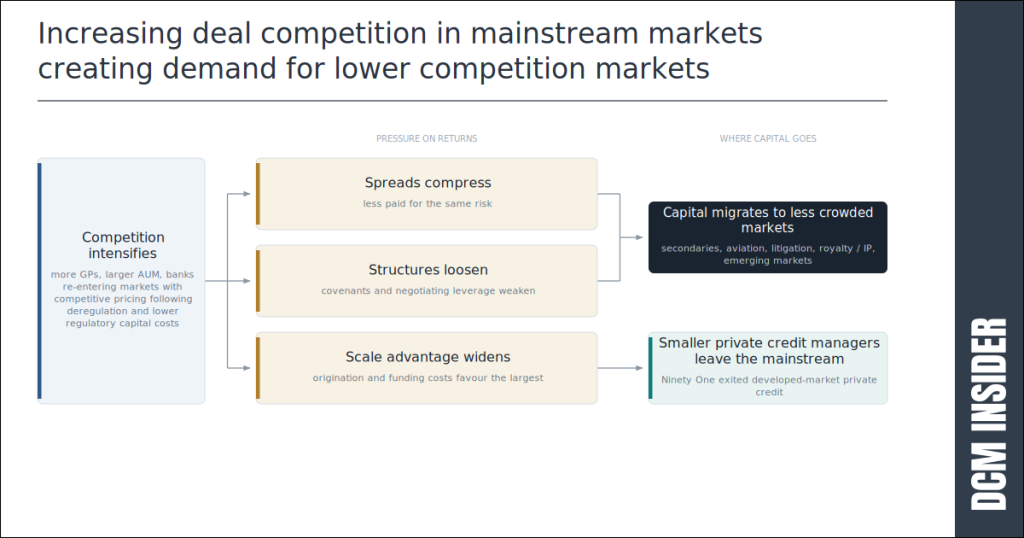
Competition has increased materially for private credit deals. The number of private credit GPs has grown, their AUM has grown, and now with banking deregulation (particularly around regulatory capital requirements), they are increasingly competing with banks for deals.
Higher competition for deals can reduce returns and encourage LPs to look for lower competition markets
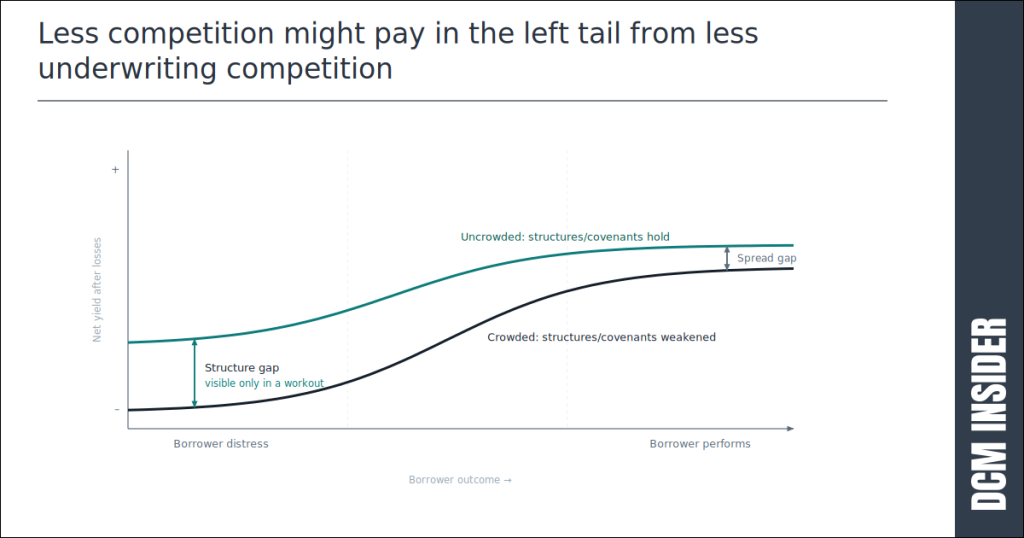
This competition for deals has led to lower spreads and less negotiating leverage around structures/covenants over time. As a result, LPs are increasingly looking at alternative private credit markets where risk-adjusted returns might be higher.
This Africa fund by Ninety One as an example
This fund from Ninety One (Africa Credit Opportunities Fund 3) is an example – with a final close of $404 million (including leverage). Investors included development finance institutions, pension funds and family offices – across Africa, Europe, and North America.
The strategy is to invest in senior secured private credit. The GP says they look to invest in deals with “conservative levels of financial leverage and good structural protections”. It finances corporate market leaders and infrastructure projects across Africa and other emerging markets including Latin America, Asia, and Central/Eastern Europe. Ninety One expects 75% to 80% of the fund will be invested in Africa.
A strategy to create value in a world with managers with 40+ times their private credit AUM – tapping pockets of unsaturated supply/unmet demand
Ninety One is a large asset manager (formerly Investec Asset Management, spun off in 2020, total AUM $250 billion), but is still relatively small in private credit with total AUM of perhaps around $5 billion (the firm discloses total “alternatives” AUM of $8.5 billion, of which private credit is a subset). This is small relative to the largest global private credit managers who each have over $200 billion private credit AUM.
Competing in mainstream private credit markets becoming difficult
Competing in the same markets as the largest managers – broad US and European direct lending, acquisition financing, etc. is likely to be difficult for smaller private credit managers – as the largest managers build strong origination and financing cost economies of scale. Ninety One CEO Hendrik du Toit announced that the firm “decided to exit from developed market private credit” in an earnings call in June.
Low competition private credit markets as a strategy for value creation and growth
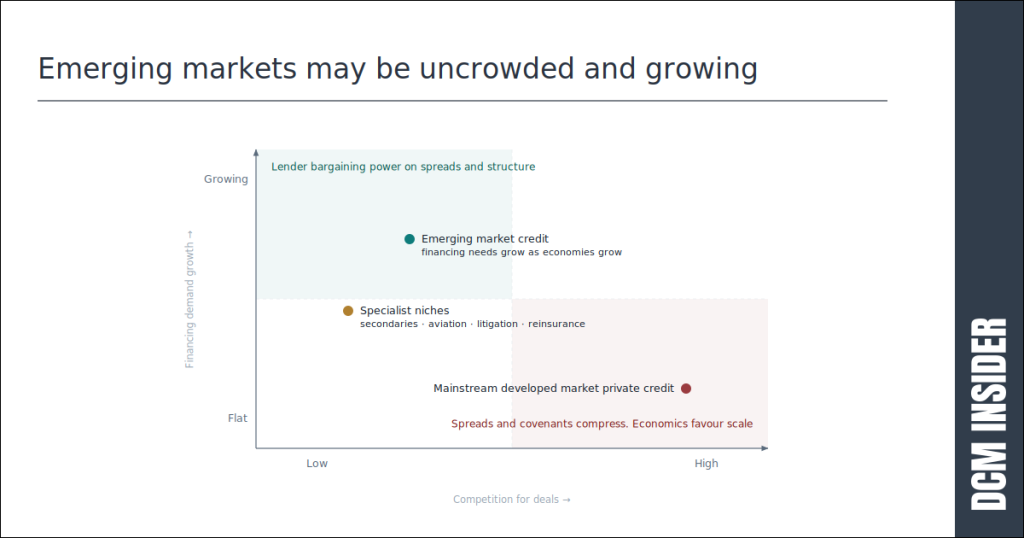
Smaller AUM in private credit managers are increasingly finding LP demand for markets which were previously difficult to attract LP demand. This includes credit secondaries, stressed/distressed, aviation financing, litigation finance, collateralised reinsurance, royalty/IP finance, specialty consumer asset-backed finance, and emerging markets.
Origination, underwriting and servicing in Africa as a moat
Ninety One provides a strong example of this. They have built a network of 500 sourcing partners across emerging markets – including sponsors, banks and governments. The firm has dual headquarters in London and Cape Town.
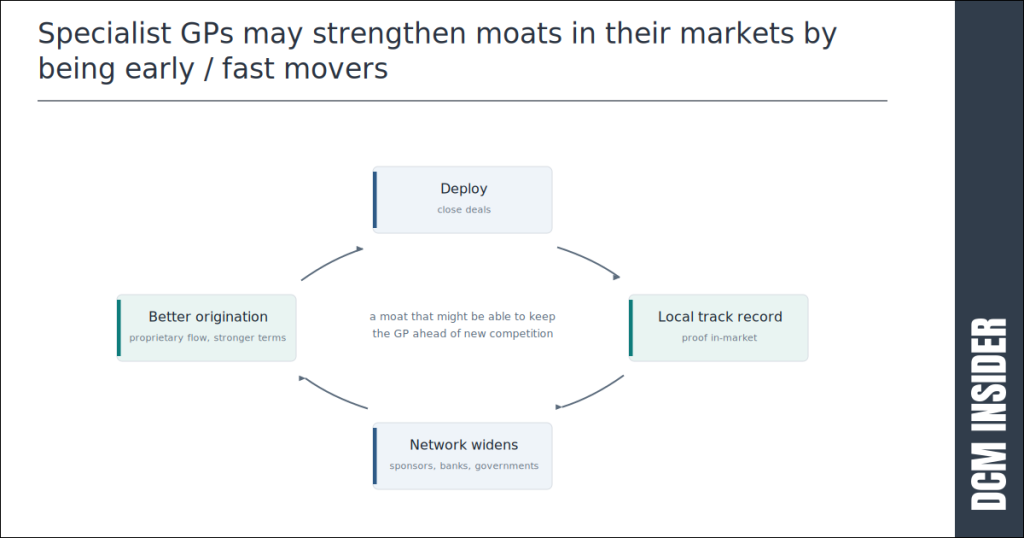
Nathaniel Micklem, co-head of EM Alternative Credit at Ninety One, told DCM Insider: “Developed-market private credit has become increasingly competitive, while emerging markets remain relatively uncrowded and continue to benefit from favourable supply and demand dynamics. Limited competition can give lenders stronger bargaining power, enabling them to negotiate robust covenants and structural protections while accessing attractive yields at the senior and senior-secured level.”
Emerging markets private credit LP demand likely to grow
Within emerging markets, we expect to see increasing LP demand and total private credit AUM – both as LPs look for areas with less supply competition that they think could provide higher risk-adjusted returns (supply side), and as financing requirements grow as these economies grow (demand side).