Lower back-leverage means lower returns in good markets and lower performance fees. The big implications: i) private credit spreads offered to issuers increase; ii) the captive insurance capital part of the private credit industry grows; iii) banks and BSLs gain market share. The risk to watch is coinciding/correlated hits to private credit – of higher retail/LP withdrawals, fire sale prices, regulatory scrutiny and resulting lower valuations, credit losses, and back leverage withdrawal.
What happened
HSBC is reported to be reducing its exposure to private credit funds by ending some credit facilities that provide back leverage to these funds. This follows a similar move by Barclays.
HSBC incurred a $400 million charge associated with the bankruptcy of MFS because of money that it had lent to Apollo’s Atlas SP which had lent to MFS. HSBC has also recently announced that it has suspended its plan to invest $4 billion into its own private credit funds.
First-order effect – private credit becomes more expensive, and there are fewer deals
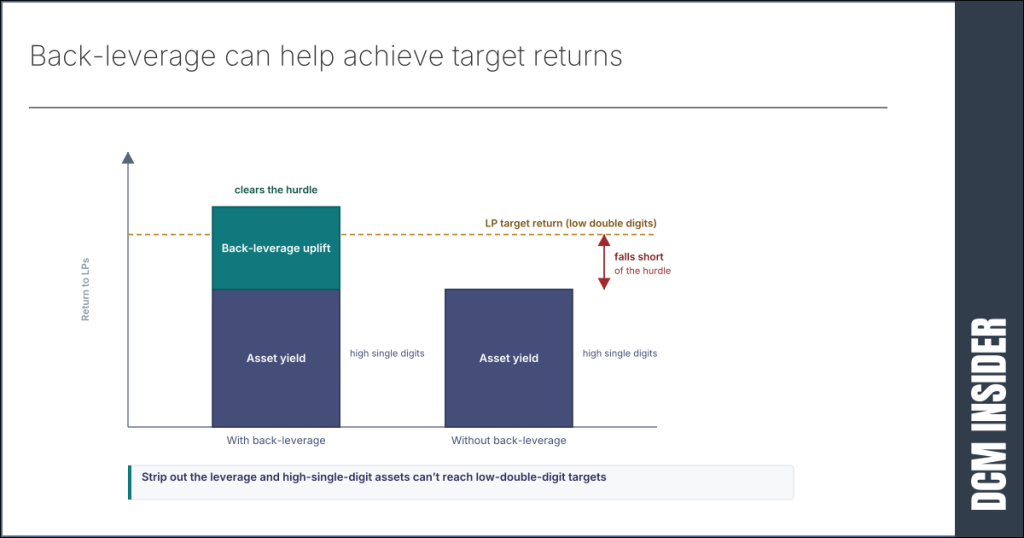
Back leverage allows funds to increase high single-digit yields to low double-digit yields. Without this leverage, it can become difficult to achieve the returns that LPs are looking for.
This effectively shifts the supply curve to the left in the private credit market, increasing yields on private credit deals and reducing the quantity of credit provided in this market.
Flywheel risk – risks of simultaneous and correlated losses, investor withdrawals, and bank leverage pull-back in private credit
There is a risk that when things go slightly wrong, then everyone runs for the door at the same time. In private credit, this could mean that at the same time, when there are some losses (even if they are completely normal losses that should be expected with that type of portfolio in a base case), even then LPs or retail investors try to withdraw funds and banks look to pull leverage. At the same time, that can in turn result in asset fire sales, which reduces prices and results in write-downs, which then creates a negative cycle. Regulators may also become highly active in this type of market at exactly this time, in looking to identify and prevent any potential systemic risks. This additional scrutiny can also result in additional investor and lender fear, as well as result in portfolio markdowns if valuation methodologies are changed.
Funds may begin to bifurcate in this type of market, where funds that have strong assets and have long-term locked-in capital (both on their LP and borrowing sides) may turn out to be very robust. Funds that have assets that are falling in value, have the ability for investors to withdraw in the short term, and have short-term bank facilities that can be cancelled on relatively short notice might fare badly. There are, of course, further potential mitigants which we look at further down this article.
Potential replacement sources of leverage
Captive insurance capital has become a much more important part of the private credit market. This may become a source of back leverage for LP-backed private credit funds that are looking for higher returns and potentially able to take more risk.
Securitization of private credit portfolios could also increase to provide an alternative and potentially highly sophisticated investor base for providing back leverage to private credit funds. Some of these investors may be able to effectively evaluate the assets and funds and assess the creditworthiness of each portfolio well.
We may also see longer-term bank facilities provided to funds where the GP has enough value for the bank for them to do the work and take the risk for this. This may favour larger GPs. This could turn out to be a meaningful driver of consolidation in the sector.
Increased LP focus on back leverage, term and type
LPs may increasingly differentiate funds based on the back-leverage arrangements that they have in place. LPs may see funds with short-term or rolling back leverage as a risk to their portfolios and returns if there is a risk that that leverage being withdrawn means that it needs to be replaced with materially more expensive leverage, or it potentially results in the fund needing to fire sell some of its assets.
Counterarguments and forces in the other direction
The private credit industry is continuing to grow and attract LP capital. That is increasing the total amount of capital available to invest in a relatively finite set of private credit transactions. This capital could potentially absorb any fire sales that are needed and could also potentially, in itself, become a source of back leverage.
HSBC and Barclays may also be specific cases which may not translate broadly across the banking system. We might find that other banks see this as an opportunity to build their portfolios and build their relationships with private credit managers and step in to continue to provide leverage. The other sources of leverage we talked about earlier in this article, like securitization of private credit portfolios or leverage from insurance capital, could also replace the debt capital of banks that pull back from this market.
Now may be the time to evaluate this risk for your business and position yourself
For issuers, this could mean evaluating the likelihood of existing private credit facilities that they have in place being renewed or refinanced. In the future, for investors, this could mean evaluating the potential scenarios that could transpire here and their implications for their portfolios.
Advertisement